



AOG in Aviation & Navigating (Aircraft on Ground) Situations
March 26, 2026
9 Signs of Mechanical Failure in Turbine Engines
How to Recognize Developing Mechanical Problems in Turbine Engines
Turbine engines are engineered to deliver reliable performance under demanding operating conditions, but even a well-maintained engine can develop wear, damage, contamination, lubrication problems, or component failures over time. Fortunately, mechanical failure in turbine engines rarely comes completely unexpectedly. Changes in vibration, temperature, oil-system behavior, engine performance, starting characteristics, and operating trends can provide valuable warning signs that something requires investigation.
For aircraft owners, operators, pilots, and maintenance teams, recognizing these changes early can make a significant difference. A relatively small abnormality may be the first indication of compressor or turbine damage, bearing deterioration, an oil-system problem, or another condition capable of becoming considerably more serious.
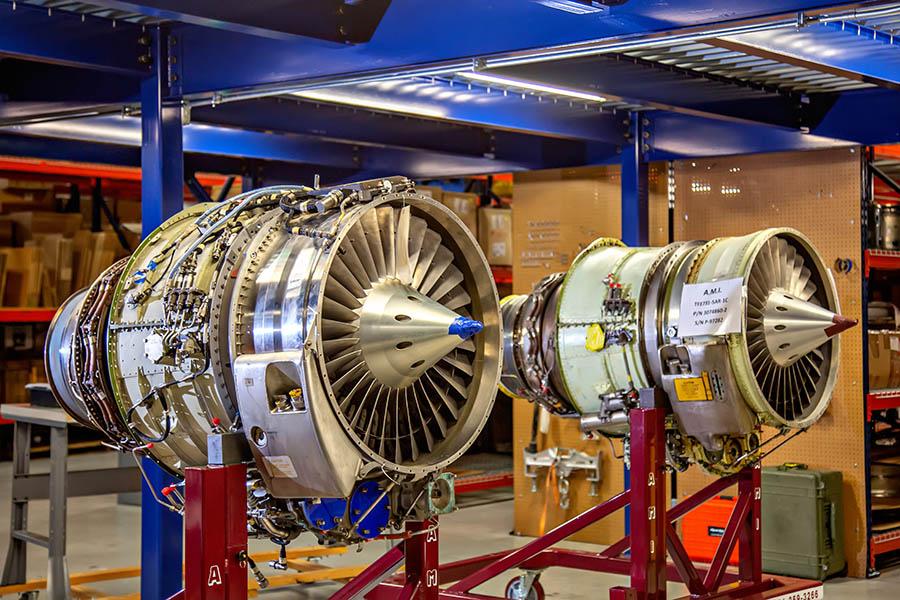
At Aviation & Marketing International (AMI), we specialize in the Honeywell TFE731 turbine engine, providing engine parts, maintenance support, technical assistance, and aviation consulting to operators worldwide. Understanding the following warning signs can help you recognize when an engine needs closer attention.
If you operate a Honeywell TFE731 and are specifically evaluating whether your engine is due for service, see our guide on signs your TFE731 engine needs inspection and maintenance.

1. Unusual or Increasing Engine Vibration
A noticeable change in vibration is one of the most important turbine engine warning signs to investigate.
Every operating turbine engine produces some vibration, but abnormal vibration or a significant change from established operating trends can point toward an internal or accessory-related problem.
The FAA’s guidance on turbine engine vibration addresses vibration as an important consideration in turbine engine operation and certification. FAA troubleshooting guidance also identifies different vibration patterns that may be associated with turbine damage, compressor damage, or engine-mounted accessories.
Potential causes can include:
- Compressor or turbine damage
- Bearing deterioration
- Rotor imbalance
- Foreign object damage/FOD (PDF p. 23)
- Damaged blades
- Problems involving engine-mounted accessories
The trend matters as much as the vibration itself. An engine that has historically operated smoothly but begins producing progressively higher vibration readings warrants investigation rather than waiting for the condition to become severe.
2. Abnormally High Inter-Turbine Temperature (ITT)
Inter-Turbine Temperature provides important information about turbine engine performance and mechanical condition.
An unexplained increase in ITT can indicate that the engine is working differently than it should. According to the FAA’s Turbofan Engine Malfunction Recognition and Response resources, temperature abnormalities can occur alongside several types of engine malfunctions.
FAA turbine-engine troubleshooting guidance also associates combinations of high ITT, abnormal RPM, and abnormal fuel flow with possible turbine damage or reduced turbine efficiency.
One isolated reading does not necessarily identify a mechanical failure. Maintenance professionals instead evaluate ITT alongside RPM, fuel flow, operating conditions, historical trends, and the specifications applicable to the particular engine.
For operators of Honeywell engines, following the applicable manufacturer’s maintenance documentation is particularly important. Honeywell continues to maintain technical publications and service information for the TFE731 engine family.

3. Low Oil Pressure or Rising Oil Temperature
Changes in the lubrication system deserve immediate attention because turbine-engine bearings and other moving components depend on reliable lubrication.
Low oil pressure can potentially result from an oil leak, pump problem, bearing or gearbox concerns, or even an indication-system fault. Elevated oil temperature can also indicate unwanted heat or problems affecting lubrication.
FAA turbine-engine troubleshooting (PDF pp. 60–61 ) information associates high oil temperature under certain operating conditions with possible main-bearing concerns and recommends further inspection of the applicable oil-system components.
Operators should pay particular attention when multiple symptoms occur together.
For example, an oil-system abnormality occurring alongside increasing vibration or changing engine performance can provide a much stronger indication that mechanical investigation is needed than one isolated instrument reading.
Our TFE731 maintenance and servicing capabilities at AMI give operators access to specialized support when engine condition, maintenance requirements, or parts availability become a concern.
4. Unexplained Loss of Oil Quantity
A gradual or sudden reduction in oil quantity should not simply be treated as a routine need to add more oil.
A continuing decrease in oil quantity may indicate leakage, abnormal oil consumption, or another condition that warrants investigation.
Maintenance personnel may need to inspect for evidence of leakage, determine whether consumption has changed from the engine’s established baseline, and evaluate related oil pressure and temperature indications.
Repeatedly replenishing oil without determining why the quantity is decreasing can allow an underlying mechanical condition to progress unnoticed.
Engine maintenance records become especially important here. Comparing current oil consumption with the engine’s previous operating history can help determine whether a change is occurring rather than relying solely on a single observation.

5. Metal Particles in the Oil System
Finding metallic debris during an oil-system inspection can provide direct evidence that something inside the engine deserves attention.
Metal particles discovered in oil screens (PDF p. 2), filters, or magnetic chip detectors can potentially indicate internal wear involving bearings, gears, shafts, or other engine components.
This is one reason oil analysis, filter inspections, chip detectors, and other condition-monitoring practices can be so valuable. They can reveal internal deterioration before it develops into a much larger mechanical problem.
The presence of metal does not automatically identify the component responsible. The type, quantity, size, location, and operating circumstances must be evaluated by appropriately qualified maintenance personnel according to the applicable engine documentation.
When component replacement becomes necessary, access to the correct parts also affects downtime. AMI maintains an extensive inventory of Honeywell TFE731 engine parts and can help operators source specific components when maintenance findings require replacement.
6. Compressor Stalls, Surges, or Unusual Engine Noises
Popping, banging, abrupt airflow disturbances, or compressor surges should never be considered normal turbine-engine behavior.
A compressor stall (PDF p. 23 ) occurs when smooth airflow through the compressor is disrupted. The FAA’s Turbofan Engine Malfunction Recognition and Response report explains that an engine surge involves a breakdown of normal airflow through the turbine engine. Potential causes can include bird strikes, internal engine failures, pneumatic bleed malfunctions, internal clearance changes, and other compressor-system problems.
Depending on the event, symptoms may include:
- Loud bangs
- Sudden vibration
- Loss of thrust
- Abnormal engine noise
- Changes in engine indications
- Yaw associated with sudden thrust loss
Likewise, new grinding, scraping, whining, rumbling, or other unusual mechanical sounds should be documented and investigated. Changes in an engine’s normal sound profile can provide another clue that a rotating component, bearing, accessory, or other part is no longer operating normally.
7. Abnormal RPM or Difficulty Producing Expected Power
A turbine engine that no longer responds or performs as expected may be experiencing more than ordinary performance degradation.
Unexpected changes in N1 or N2, slow acceleration, unstable RPM, abnormal fuel flow, or difficulty achieving expected thrust can indicate an engine or control-system problem.
The most useful diagnosis generally comes from evaluating these parameters together rather than focusing on one instrument.
For example, FAA troubleshooting information associates certain combinations of high EGT, low RPM, and high fuel flow (PDF p. 61, Figure 10-75 ) with possible turbine damage or loss of turbine efficiency. The same guidance notes that different vibration and performance combinations can point maintenance personnel toward the compressor, turbine, accessories, or other systems.
Comparing current performance with established engine trends can make subtle deterioration easier to recognize.
For TFE731 operators specifically, the engine’s configuration, maintenance history, operating time, previous inspections, and applicable technical documentation should all be considered when evaluating a performance change.
8. Hot Starts, Hung Starts, or Increasingly Difficult Starts
Starting behavior such as hot starts and hung starts (PDF p. 23) can reveal problems that are less obvious during normal operation.
A hot start occurs when temperature exceeds the applicable safe limit during starting, while a hung start generally describes a condition in which the engine fails to accelerate normally toward the expected idle speed.
Changes in starting characteristics may point toward issues involving:
- Fuel delivery or control
- Starting-system performance
- Compressor or turbine condition
- Sensors or instrumentation
- Internal engine deterioration
FAA turbine-engine troubleshooting guidance specifically notes that engines with turbine-section damage may exhibit a tendency to hang during starting.
That makes repeated starting abnormalities useful diagnostic information rather than simply operational inconveniences.
Maintenance requirements following an abnormal start should always be determined using the applicable aircraft and engine documentation.
9. Changes in Engine Trend Data
Some mechanical problems do not begin with dramatic noise, smoke, vibration, or an obvious instrument warning.
They begin with small deviations from normal operating data.
Engine condition monitoring and trend analysis (PDF p. 2) allow operators and maintenance professionals to compare key parameters over time. For the TFE731 specifically, Honeywell documentation demonstrates the importance of formal trend monitoring within certain engine support and warranty programs.
Depending on the aircraft and engine, useful trends may include:
Turbine Engine Parameter: |
What a Change May Help Identify: |
| ITT – | Efficiency loss, combustion or turbine-related concerns |
| Oil pressure – | Lubrication-system problems |
| Oil temperature – | Excess heat or lubrication problems |
| Oil quantity – | Leakage or abnormal consumption |
| N1/N2 – | Changes in rotating-system performance |
| Fuel flow – | Efficiency or fuel-system abnormalities |
| Vibration – | Imbalance, bearing, compressor, turbine, or accessory problems |
| Starting behavior – | Fuel, starter, control, or internal engine problems |
Trend data is particularly valuable because it establishes what is normal for that specific engine. A parameter can sometimes remain within an allowable operating range while gradually moving away from its historical baseline.
That developing trend can provide valuable warning before the problem becomes obvious through a major operational symptom.

What to Do When You Notice Turbine Engine Warning Signs
A suspected turbine engine problem should be evaluated according to the applicable aircraft flight manual, engine maintenance manual, approved maintenance program, and regulatory requirements rather than diagnosed from one symptom alone.
Depending on the condition, qualified maintenance personnel may use inspections, operating data, oil-system checks, engine records, and borescope inspection to determine what is occurring internally.
Borescope inspections are particularly useful because technicians can examine areas within the engine without initially performing complete disassembly. During turbine-engine inspection, technicians can look for evidence of component damage, deterioration, contamination, or other conditions that require additional evaluation.
The goal is not simply to identify a symptom. It is to determine its source, assess the condition of the affected components, and establish the appropriate maintenance response before further deterioration occurs.
Operators can also consult the FAA’s broader Engines and Propellers resources for technical information, safety reports, malfunction-recognition resources, and turbine-engine guidance.
Why Early Detection of Turbine Engine Problems Matters
Mechanical deterioration rarely becomes less expensive or less consequential when ignored.
Finding a developing issue early can help maintenance teams address worn or damaged components before additional engine systems are affected. Condition monitoring can also improve maintenance planning by providing evidence about how an engine is actually performing rather than relying exclusively on obvious symptoms.
This is especially important with turbine engines because internal rotating components operate under significant rotational forces and temperatures. Compressor and turbine components must maintain extremely precise operating relationships while being exposed to demanding conditions throughout the engine’s service life.
FAA airworthiness requirements and guidance therefore place considerable emphasis on inspection, maintenance, continued airworthiness, and compliance with applicable manufacturer instructions. Operators can review the FAA’s current Aircraft Certification Product Issues Lists for additional information regarding current engine and propeller certification issues.
The safest approach is to treat meaningful changes in engine behavior as information—not inconveniences. Abnormal vibration, temperature, oil-system behavior, RPM, fuel flow, noise, or starting characteristics all deserve appropriate evaluation.

TFE731 Technical Support, Parts & Turbine Engine Expertise
When your aircraft relies on a Honeywell TFE731, access to experienced technical support and the correct parts can become especially important when a maintenance issue develops.
At Aviation & Marketing International, we’ve specialized in TFE731 engines, parts, technical services, and aviation consulting for decades. AMI was established in 1991, and our team’s experience spans engine shops, overhaul and heavy-engine operations, engineering, aviation consulting, aircraft operations, sales, and customer support.
We also maintain more than 60,000 TFE731 engine parts, supported by worldwide sourcing capabilities when a required component is not already in stock. Operators looking for a specific component can use our online TFE731 parts search to begin identifying the parts they need.
Our Kingwood, Texas facility is positioned near George Bush Intercontinental Airport to help support 24/7/365 AOG requirements and rapid parts movement when an aircraft needs to return to service quickly.
If you’re dealing with a TFE731 maintenance concern, sourcing an engine component, or need experienced technical guidance, contact Aviation & Marketing International or call 281-359-3266. We’ll help you evaluate your options and identify the appropriate next step for your TFE731 engine, parts, or maintenance requirements.


